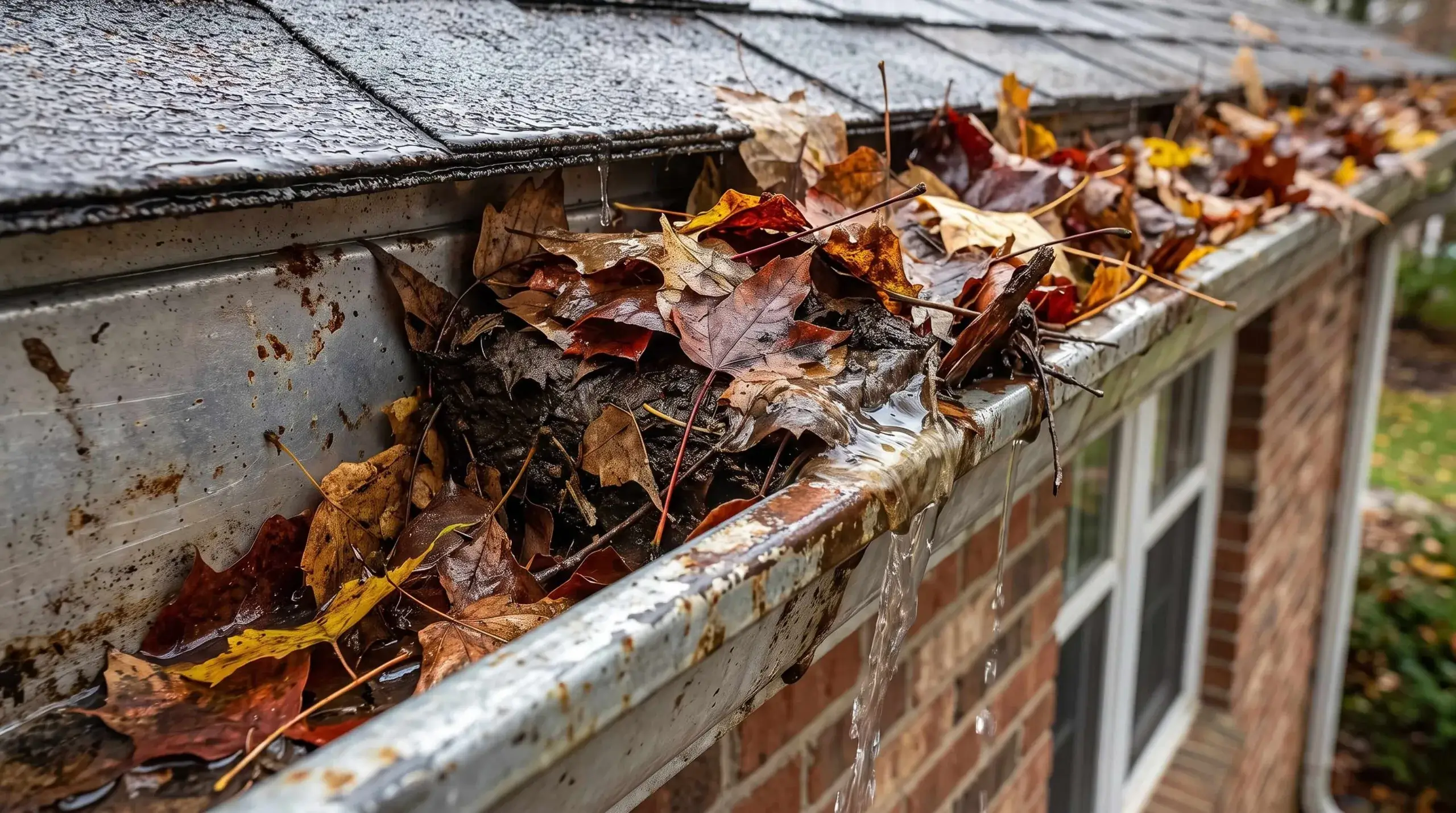
Most Okanagan homeowners think about gutters after the first heavy rain, which is exactly when it is too late. Debris from summer wildfires, pine needles, and cottonwood fluff can pack your gutters tight through the dry months, and when fall arrives with its steady downpours, blocked channels send water straight toward your foundation and fascia. A quick gutter cleaning checklist run through before fall can save you thousands in repairs.
- Why Fall Gutter Cleaning Matters in the Okanagan
- Full Gutter Cleaning Checklist for Okanagan Fall
- Signs Your Gutters Need Immediate Attention
- DIY vs. Professional Gutter Cleaning in the Okanagan
- Protecting Your Property Beyond the Gutters
- Frequently Asked Questions
Why Fall Gutter Cleaning Matters in the Okanagan
The Okanagan has a climate that is uniquely hard on gutters. Hot, dry summers load your roof with pine needles, smoke residue, and cottonwood debris. Then fall flips the switch: temperatures drop, deciduous trees shed fast, and rain arrives in sustained bursts rather than gentle drizzle. That combination means gutters that looked fine in August can be completely blocked by mid-October.
Blocked gutters do more damage than most people expect. Water that cannot drain overflows against the fascia, works under shingles, and pools at the base of your exterior walls. In Penticton and surrounding areas, where clay-heavy soils can shift when saturated, foundation drainage is not a minor concern. Gutter cleaning in Penticton is a genuine seasonal maintenance priority, not an optional task you can push to spring.
Scheduling your clean-out before the heavy leaf drop, typically late September, gives you the best result. You remove summer buildup first, then do a second lighter pass once the trees have finished shedding in late October or early November.
Full Gutter Cleaning Checklist for Okanagan Fall
Work through each item in order. Skipping steps, especially the flush and slope check, is where most DIY attempts fall short and leave problems hidden until winter.
- Clear the roof surface first. Use a leaf blower or soft broom to push debris off the roof before it falls into the gutters you just cleaned.
- Remove debris by hand. Scoop out leaves, needles, and compacted muck with a gutter scoop or gloved hand. Bucket it rather than flushing it down the downspout.
- Check for standing water. Puddles in the gutter channel indicate a sag or incorrect slope. The gutter should pitch roughly one quarter inch per ten feet toward the downspout.
- Flush with a garden hose. Run water from the far end toward the downspout. Watch for leaks at seams and joints, and confirm water exits freely at the bottom.
- Clear and test downspouts. Push the hose directly into the downspout top. If pressure builds, the pipe is blocked. A plumber’s snake or a burst of water from below usually clears it.
- Inspect hangers and fasteners. Pull on each hanger to confirm it is still anchored to the fascia. Loose hangers let gutters sag and pull away from the roofline.
- Seal visible cracks and gaps. Apply gutter sealant to small cracks and end caps while everything is dry. Silicone-based sealant works best in freeze-thaw conditions.
- Consider a leaf guard. If your roof sits under heavy tree cover, a mesh guard reduces the frequency of full clean-outs to roughly once every one to two years rather than twice a year.
This checklist covers the essential steps whether you are tackling the job yourself or briefing a professional before they arrive. Either way, the result should be a system that handles Okanagan fall rain without overflowing.
Signs Your Gutters Need Immediate Attention
You do not always have to climb a ladder to know something is wrong. Several warning signs are visible from the ground and should push gutter cleaning to the top of your to-do list.
- Water stains on siding. Dark streaking down your exterior walls usually means the gutter has been overflowing during rain events.
- Plants growing from the gutter. If you can see grass or weeds sprouting, debris has been sitting long enough to become a growing medium.
- Gutters visibly pulling away from the fascia. Weight from wet debris or ice is more than the hangers were designed to hold.
- Pooling water near the foundation. If your downspouts discharge close to the house and the gutters are blocked, water concentrates at the worst possible point.
- Basement dampness after rain. This is not always a gutter issue, but it is the first place to check before spending money on interior waterproofing.
Any one of these signs warrants action within a week or two. Multiple signs together mean the job is overdue and the risk of damage is already elevated. Our property care inspections can flag these issues early as part of a broader seasonal check.
DIY vs. Professional Gutter Cleaning in the Okanagan
Single-storey homes with straightforward rooflines are manageable for a confident DIYer with a stable ladder, gloves, a bucket, and a hose. The job takes two to three hours on an average house, and the materials cost next to nothing. That said, there are situations where professional help is the smarter call.
Two-storey and split-level homes introduce real fall risk. Steep or metal roofs, rooflines over garages, and homes with complex valley systems are also much harder to navigate safely without the right equipment. In those cases, the cost of professional gutter cleaning in Penticton is well below the cost of an ER visit or a cracked foundation from a season of overflow. Our exterior cleaning service includes gutter work as part of a full exterior maintenance package.
Professionals also bring a trained eye to the inspection side of the job. A technician who cleans gutters regularly will spot a cracked section, a failing hanger, or a downspout that discharges in the wrong direction, details that are easy to miss when you are new to the task. That early catch often prevents a repair bill that dwarfs the original service cost.
Protecting Your Property Beyond the Gutters
Gutters are one part of a broader fall exterior maintenance picture. While you are already set up with a ladder and hose, it is worth running through a few connected items that affect how well your home handles the wet season.
Check your downspout extensions and splash blocks. Water discharged within two feet of the foundation will work its way in eventually. Extensions that direct water at least six feet away from the house make a measurable difference. While you are at it, walk the perimeter and confirm the grade still slopes away from the foundation. Soil settles over time and low spots can develop near the house without you noticing.
Window wells, basement window sills, and exterior door thresholds are also worth a look. Debris accumulates in window wells and blocks the small drain at the bottom, turning them into collection bowls during heavy rain. A quick clear-out takes minutes and prevents water intrusion that is expensive to fix. For rental properties and vacation homes, staying on top of this kind of seasonal exterior work protects both the building and your rental income. Our property maintenance and seasonal rental homes services are built around exactly this kind of recurring care.
If your home has been vacant over the summer, a walk-through that covers gutters, exterior drainage, and weatherstripping before fall is especially valuable. Our vacant home inspections are designed to catch these issues before they become expensive surprises.
Ready to get your Okanagan home prepared before fall rains arrive? Whether you need gutter cleaning in Penticton, a full exterior clean, or an end-of-season property check, Crook’s Cleaning and Property Services is here to help. Contact us today to book your fall service, or visit our Penticton cleaning services page to learn more about what we offer.
Frequently Asked Questions
How often should Okanagan homeowners clean their gutters?
Twice a year is the standard recommendation for most Okanagan homes: once in late September before peak leaf fall, and again in late October or November once deciduous trees have finished shedding. Homes under heavy conifer cover may need a third clean in spring to remove pine needle buildup from winter.
What determines the cost of professional gutter cleaning in Penticton?
Pricing varies based on home size, storey height, and how blocked the gutters are, so we recommend contacting us directly for an accurate quote. Two-storey homes or heavily blocked systems are typically at the higher end.
Can clogged gutters cause foundation damage?
Yes, and it is one of the more expensive consequences of skipping gutter maintenance. When gutters overflow repeatedly, water saturates the soil around your foundation. Over time, that water pressure can cause cracks, shifting, or basement seepage. In the Okanagan where clay soils are common, the risk is higher than in areas with more porous ground.
Do gutter guards eliminate the need for cleaning?
No, but they significantly reduce frequency. Good mesh or micro-mesh guards keep most debris out while letting water through, cutting full clean-outs from twice a year to roughly once every one to two years. Fine debris like pine needles and shingle grit can still accumulate on top of the guard and eventually slow flow, so some maintenance is always required.
Is fall gutter cleaning safe to do yourself?
For single-storey homes with stable ground and good ladder access, yes. Use a ladder rated for your weight plus equipment, have a helper hold the base, and never overreach to avoid repositioning. For two-storey homes, steep rooflines, or any situation where you are not fully confident in your footing, hiring a professional is the safer and smarter choice.
What else should I check while cleaning my gutters in fall?
Use the visit to inspect fascia boards for rot, check that downspout extensions are intact and directing water away from the foundation, and clear any window wells of debris. It is also a good time to look at the first few rows of shingles for lifted edges or missing tabs that could let water in over winter.